

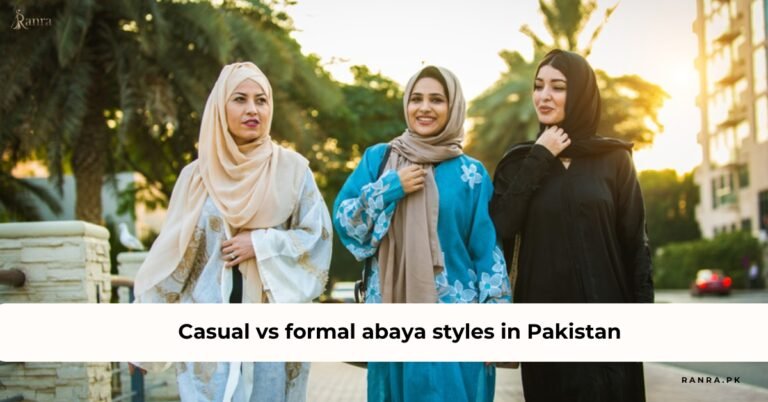
As a Pakistani Muslim woman, your abaya is more than just a garment—it’s an expression of faith, culture, and personal style. Whether you’re heading to the university, attending a family gathering, or preparing for a formal event, choosing the right abaya style can make all the difference. At ranra.pk, we understand that navigating the world of casual and formal abayas can sometimes feel overwhelming, especially with so many beautiful options available. That’s why we’ve created this comprehensive guide to help you distinguish between casual and formal abaya styles in Pakistan, ensuring you always look and feel your best, no matter the occasion.
Casual abayas are designed for everyday wear, offering comfort, practicality, and effortless style. These are the abayas you reach for when running errands, meeting friends for chai, or attending classes. The key characteristics of casual abaya styles in Pakistan include:
Casual abayas typically feature lightweight, breathable fabrics like cotton, jersey, or chiffon blends. These materials allow for ease of movement and are perfect for Pakistan’s varying climates. Think of that soft cotton abaya you love wearing on a warm Karachi afternoon or the comfortable jersey abaya that feels like a hug during Lahore’s cooler evenings.
Casual styles tend to have simpler designs with minimal embellishments. You might find subtle embroidery, basic piping, or simple button details. The focus is on clean lines and understated elegance rather than heavy ornamentation. Many Pakistani women prefer solid colors or subtle prints for their everyday abayas, making them versatile and easy to pair with different hijabs and accessories.
Look for practical elements like pockets (a must-have for many Pakistani women!), comfortable sleeves, and easy closures. Casual abayas often feature front openings with simple buttons or zippers, making them quick to wear and remove. At ranra.pk, we’ve noticed that our customers particularly appreciate abayas with practical details that fit seamlessly into their busy lives.
Formal abayas are reserved for special occasions where you want to make an impression while maintaining your modesty. These are the abayas you wear to weddings, Eid celebrations, formal dinners, or important family events. When we talk about formal abaya styles in Pakistan, several distinctive features come to mind:
Formal abayas often feature richer fabrics like silk, satin, velvet, or heavily embroidered materials. These fabrics drape beautifully and create an elegant silhouette that’s perfect for special occasions. During wedding season in Pakistan, you’ll see stunning formal abayas in luxurious fabrics that catch the light and move gracefully.
This is where formal abayas truly shine. Expect to find detailed embroidery, sequin work, bead detailing, lace accents, and sometimes even handcrafted elements. The level of craftsmanship in formal Pakistani abayas can be breathtaking, with many featuring traditional embroidery techniques passed down through generations.
Unlike the relaxed fit of casual abayas, formal styles often have more structured silhouettes. You might find abayas with defined waistlines, tailored cuts, or elegant draping that creates a more polished look. These designs are meant to stand out while still providing full coverage according to Islamic principles.
Understanding the appropriate occasion for each style is crucial for every Pakistani woman. Here’s a practical guide to help you decide:
• Daily university or college wear
• Grocery shopping or running errands
• Casual family visits
• Outdoor activities or park outings with children
• Office wear (depending on your workplace dress code)
• Casual iftar gatherings during Ramadan
• Wedding ceremonies and receptions
• Eid celebrations and special religious events
• Formal dinner parties or corporate events
• Engagement ceremonies and mehndi functions
• Important family gatherings like anniversaries
• Cultural events or formal community gatherings
One of the beautiful aspects of Pakistani modest fashion is how you can sometimes blend casual and formal elements. For instance, you might choose a simple abaya in a luxurious fabric for a semi-formal event, or add statement accessories to elevate a basic casual abaya. At ranra.pk, we encourage our customers to experiment with layering and accessories to create unique looks that bridge both worlds.
Start with 2-3 high-quality casual abayas in neutral colors that can be mixed and matched. These will form the foundation of your everyday wardrobe. Then, invest in 1-2 formal abayas that make you feel special and confident. Consider colors that complement your skin tone and can be worn to multiple types of events.
In Pakistan’s diverse climate, your abaya choices should adapt to the seasons. Lightweight fabrics work best for summer months, while slightly heavier materials provide comfort during cooler periods. For formal winter events, consider abayas in richer fabrics like velvet or heavier embroidered materials.
Accessories can transform your look. For casual abayas, consider simple leather handbags, comfortable flats, and understated jewelry. For formal occasions, you might choose embellished clutches, elegant heels, and statement jewelry pieces that complement your abaya’s embellishments without overwhelming them.
While exploring different abaya styles, remember to balance contemporary trends with cultural appropriateness. What works for a wedding in Lahore might differ from what’s suitable for a formal event in Islamabad. Always consider the specific context and maintain the dignity and modesty that the abaya represents.
Mastering the distinction between casual and formal abaya styles in Pakistan empowers you to make confident fashion choices that align with your values, lifestyle, and occasions. It ensures you’re appropriately dressed for every moment while expressing your personal style within the framework of modesty. This knowledge helps you invest wisely in pieces that you’ll wear and love for years to come.
When shopping for both casual and formal abayas, prioritize quality craftsmanship, comfortable fabrics, and designs that make you feel confident. At ranra.pk, we’re committed to providing Pakistani women with abayas that combine traditional modesty with contemporary style. Our collection includes carefully curated pieces suitable for various occasions, all designed with the Pakistani woman in mind.
Whether you’re drawn to the comfort of casual abaya styles or the elegance of formal designs, understanding the distinction between these categories helps you build a versatile wardrobe that serves all aspects of your life. Remember that your abaya choices should reflect both your personal style and the requirements of each occasion. By mastering casual vs formal abaya styles in Pakistan, you can navigate any event with confidence, grace, and impeccable style that honors both your faith and fashion sense.
We invite you to explore ranra.pk’s collection to discover abayas that perfectly match your lifestyle needs. Whether you’re looking for comfortable everyday pieces or stunning formal options, we’re here to support your modest fashion journey with quality, style, and understanding of what Pakistani women truly need and want in their abayas.
WhatsApp us